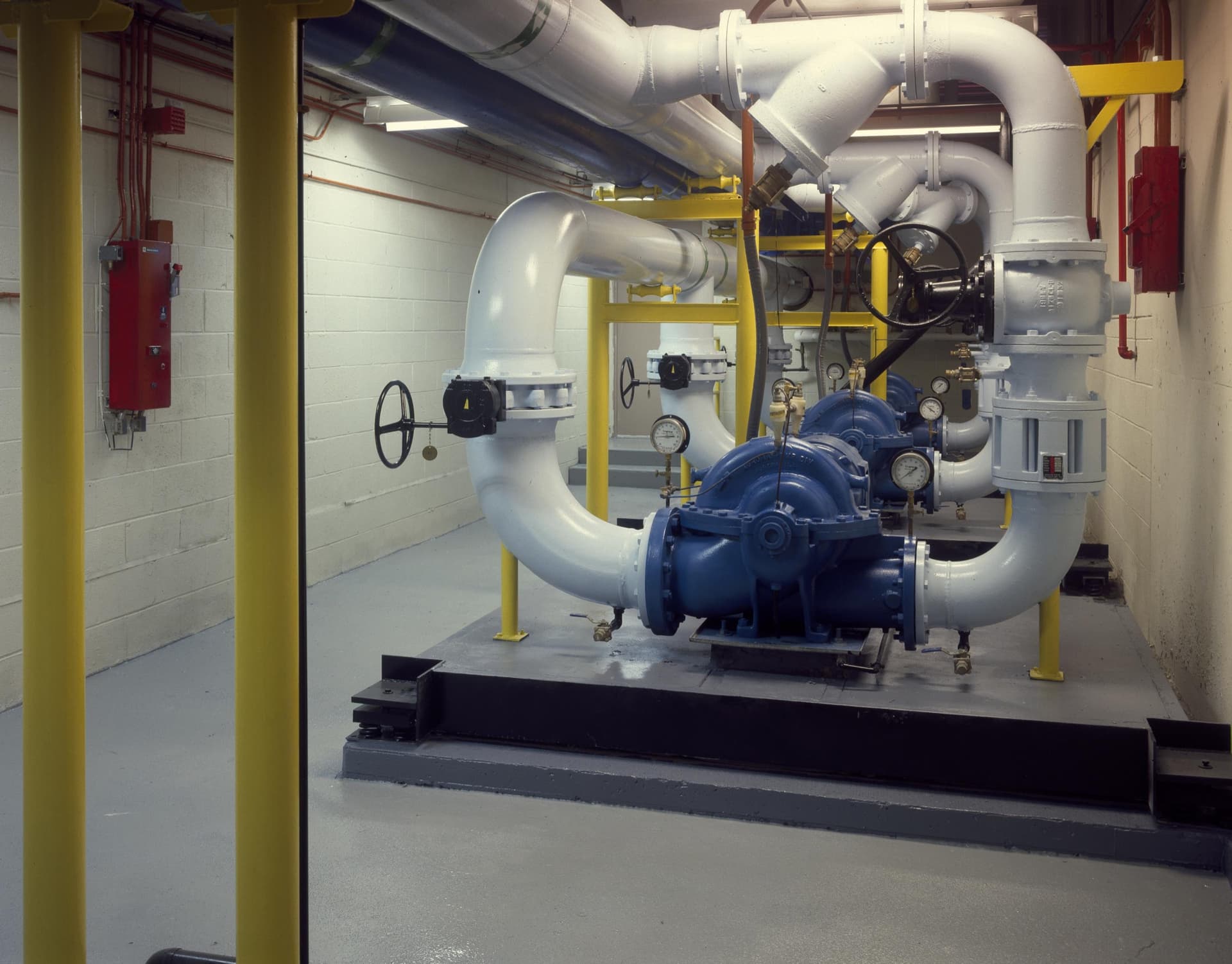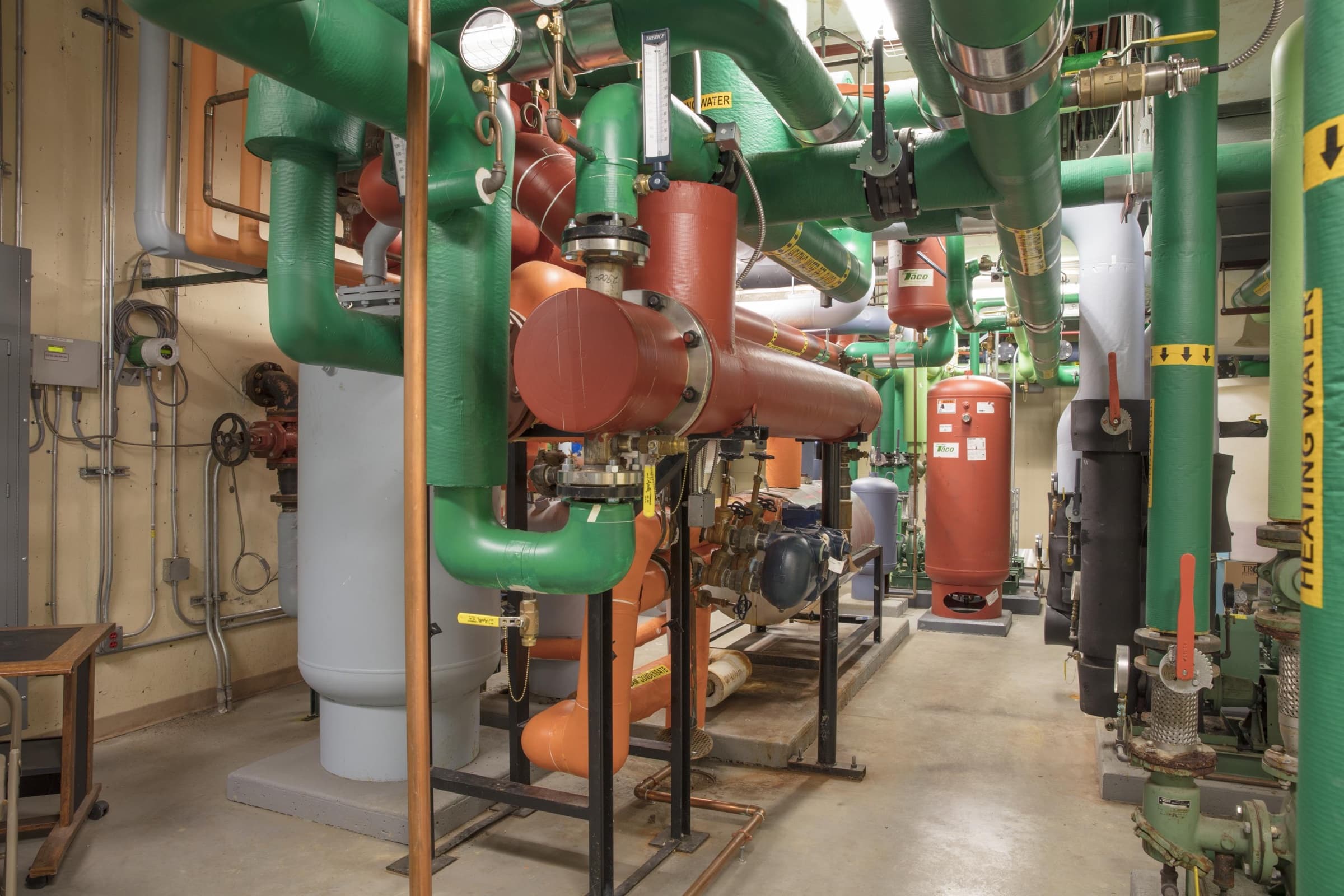
Cold water enters your building under mains pressure and travels through a system of pipes. Somewhere along that route it has to gain heat. How it does that is the whole difference between one type of water heater and another.

Storage heaters
A storage heater keeps a tank of water hot and ready. A thermostat watches the temperature, and a burner or an electric element fires whenever the water in the tank drops below the set point.
Cold water enters at the bottom of the tank through a dip tube. Hot water is drawn from the top, because heat rises and the hottest water in the tank collects there. That is why a storage heater delivers steadily at first and then runs cool — you are drawing hot water faster than the burner can replace it.
It suits buildings with predictable, concentrated demand: a hotel floor at 7am, a factory shift change.
Instant, or tankless, heaters
An instant heater stores nothing. When you open a tap, a flow sensor detects the movement and fires the burner or element. Water is heated as it passes through a heat exchanger, and the heater shuts off when the tap closes.
Because nothing is kept hot, there is no standby loss — but the heat has to be delivered in the seconds the water takes to pass through. That sets a limit on how much hot water you can draw at once.
It suits homes and light commercial premises with intermittent demand.

Heat pumps
A heat pump does not create heat, it moves it. It draws warmth from the surrounding air or from a water source, compresses the refrigerant carrying that heat until it is hotter still, and transfers it into your water.
Because the energy mostly moves rather than being generated, a heat pump can deliver several units of heat for each unit of electricity it consumes. That is where the running-cost saving comes from.
It suits commercial buildings with steady, year-round demand, where the lower running cost repays the higher installed cost.
Which one for your building?
It depends on how much hot water you need, how sharply that demand peaks, and what fuel you have available. We size systems around the actual load and operating profile rather than a rule of thumb — tell us about your building and we will work it through with you.